Does Metro Nashville's Type 2 STR ordinance affect my cost segregation deduction?
No. IRS rules are federal; Metro Council's Type 1 (owner-occupied) vs Type 2 (non-owner-occupied) zoning rules affect operations, not depreciation. Your federal cost-seg basis is your acquisition cost from the closing disclosure regardless of your STR permit class. Nashville STR operators in restricted RS / R6 / R8 zones still qualify for cost segregation as long as the property generates rental income.
I have a Type 1 owner-occupied STR, does cost seg work on the rental portion?
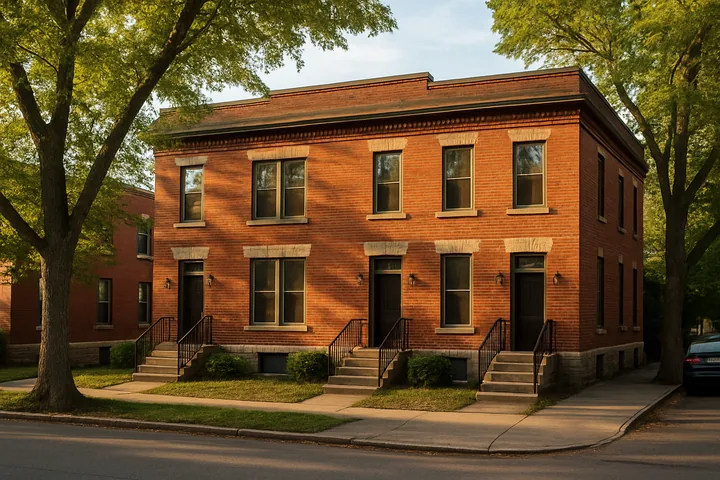
Yes, on the rental portion only. An engineer scopes the basis allocation between primary residence (homestead, non-depreciable) and rental space, the rental portion gets full cost-seg treatment, the homestead portion doesn't. Common for owner-occupied duplexes in East Nashville and Germantown where one unit is the owner's residence and the other is short-term rented.
Davidson County reassessed me. Does that change my cost-seg numbers?
No. Davidson County's quadrennial reassessment affects property tax (your Trustee bill), not the IRS basis used for federal depreciation. Your cost-seg basis is your acquisition cost (the closing-disclosure number) plus any subsequent capital improvements minus land value, not the assessor's market value. The assessor's land/improvement split is one input to the cost-seg study's land allocation methodology, but reassessments of total property value don't change federal depreciable basis once placed in service.
I'm doing a 1031 exchange from California to Nashville. Can I cost seg the new property?
Yes, extremely common play right now. The carry-over basis from the relinquished California property plus any boot becomes the new basis. Cost seg can run on that basis. Your CPA has to coordinate the IRC §1031 deferral and §168(k) bonus depreciation properly; the cost-seg study sits on top of whatever basis lands. California-to-Tennessee 1031s have grown sharply since 2023.
My East Nashville property is in a zoning district fighting Type 2 STR enforcement. Does that matter for cost seg?
Operationally maybe; for depreciation, no, your basis is your basis. As long as the property is income-producing in the tax year (LTR, MTR, or STR), it qualifies for cost segregation. If Metro Council eventually forces a use change, you may face recapture later, but that's a separate question from whether cost seg makes sense now.
How does Nashville compare to Austin, Miami, or Atlanta for cost-seg ROI?
Nashville is in the top quartile, similar to Austin and Miami. Tennessee has no state income tax, federal acceleration is the whole benefit, with no decoupling or parallel state schedule to maintain. Nashville's specific edge in this peer group is operational: lighter STR regulation than competing major STR markets, plus bachelorette / NFL Draft / CMA Fest event-driven STR demand that drives FF&E density above the national STR median. Investors comparing markets with state income tax + federal conformity should weigh the combined-rate profile separately on each market's page.
I'm converting my Type 2 STR to long-term rental. Can I still cost seg?
Yes. Cost seg works on LTR, MTR, and STR alike. The 5-year personal property classification (FF&E) is reduced when you convert to unfurnished LTR (you'd remove the furniture from the depreciable basis), but 15-year land improvements and the underlying 5/7/15-year structural component reclassification stays intact. LTR cost seg in Nashville typically reclassifies 18-20% of basis vs 27% for STR.